Welcome to the official website of Shandong Tengda Engineering Machinery Equipment Co., Ltd


What Is the Core Recovery Rate Range of Full Hydraulic Core Drilling Rigs in Fractured Formations?
Core drilling in fractured formations presents significant challenges. The core recovery rate (CRR) is a critical metric for evaluating drilling quality, directly impacting the accuracy of geological data and resource assessment. Full hydraulic core drilling rigs, with their high precision, adaptability, and superior parameter control, offer distinct advantages in such complex conditions. This article objectively discusses the achievable core recovery rate range, influencing factors, and key technical considerations when operating in fractured formations.

Definition and Industry Benchmarks for Core Recovery Rate
Core Recovery Rate is the percentage of the actual core length recovered versus the drilled interval. In intact, homogeneous formations, a properly operated hydraulic core drill can consistently achieve rates above 95%, often nearing 100%. However, in fractured strata—such as fault zones, jointed rock, or formations with solution cavities—the rock mass is incompetent. The core is prone to fragmentation, abrasion, or wash-away during drilling, leading to a substantial decline in recovery.
Expected Recovery Rate Range in Fractured Formations
Based on industry practice and technical literature, when using high-performance full hydraulic exploration drills for coring in moderately to heavily fractured formations, a reasonable core recovery rate typically ranges between 70% and 90%.
- 70%-80%: Can be considered acceptable to good performance in highly fractured or strongly weathered zones, achievable through standardized procedures, requiring excellent machine stability and feed control.
- 81%-90%: Represents good to excellent performance in moderately fractured formations, attainable by optimizing the drill string assembly, flushing medium, and operational practices.
- Below 70%: Often indicates extremely friable ground or significant room for improvement in drilling technique, such as inappropriate tool selection or parameters.
- Above 90%: Constitutes outstanding performance in fractured ground, usually relying on top-tier equipment, highly experienced crews, and formation-specific tailored practices.
Key Influencing Factors and Technical Countermeasures
- Rig Performance and Stability:
- Factor: The smooth, steplessly adjustable feed pressure and rotation speed provided by a full hydraulic system are fundamental to preserving fragile core. Excessive machine vibration exacerbates core breakage.
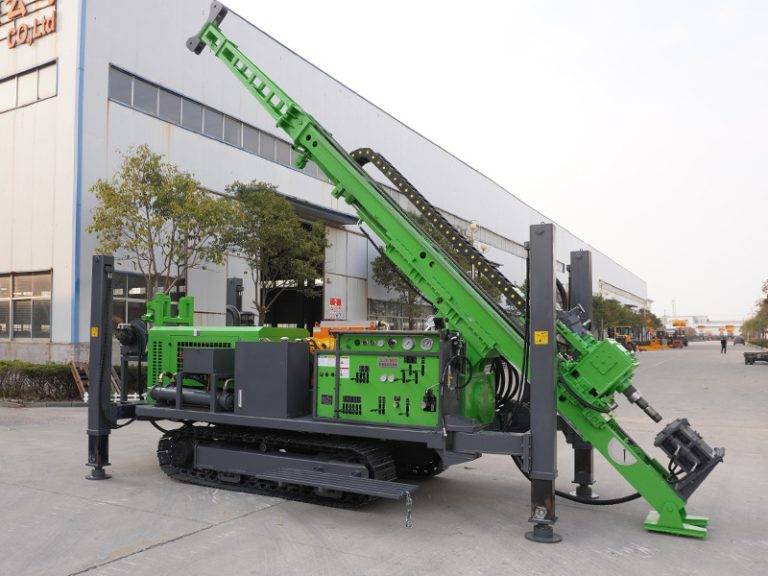
- Countermeasure: Employ proven crawler hydraulic core drills, which offer superior platform stability on rough terrain and enable precise operations. The rig should feature high-precision monitoring and control for pressure and flow.
- Coring Method and Tool Selection:
- Factor: Conventional single-tube coring is ineffective in fractured formations, as flushing fluid directly erodes the core.
- Countermeasure: Prioritize the use of wireline coring drill technology. Its double-tube system (outer barrel rotates, inner barrel remains stationary) effectively isolates the core from flushing fluid erosion and allows for core retrieval while keeping the drill string in the hole, which is particularly beneficial for continuous coring in long, broken intervals. Additionally, core barrels with features like inner tube over-shot, split inner tubes, or plastic liners should be used to enhance core integrity.
- Bit Selection and Drilling Parameters:
- Factor: The bit type directly affects rock fragmentation efficiency and how easily the core enters the inner tube. Aggressive parameters can shatter the core, while insufficient parameters increase grinding and wear.
- Countermeasure: In broken ground, impregnated diamond bits or specially designed PDC bits with face profiles that facilitate core entry are often selected. Operational principles of “low RPM, moderate pressure, constant flow” should be applied to minimize mechanical destruction and hydraulic erosion.
- Flushing Medium Management:
- Factor: The flushing fluid affects both hole stability and comes into direct contact with the core.
- Countermeasure: Use high-quality, low-solid, high-lubricity, and appropriately viscous mud or polymer fluids. A good fluid system forms a thin, tough filter cake, stabilizing the borehole wall while also coating the core, reducing fragmentation and abrasion during its travel inside the barrel.
- Operator Expertise:
- Factor: The driller’s intuitive judgment of formation changes and immediate parameter adjustment is crucial.
- Countermeasure: Intensive training enables operators to master “feel of drilling”—interpreting downhole conditions from gauge readings and machine sounds—and to take timely corrective actions, such as adjusting parameters or hoisting the string upon entering a severely broken zone.
In summary, achieving a stable core recovery rate between 70% and 90% in fractured formations is technically feasible and aligns with industry expectations when leveraging the precise control of modern full hydraulic core drilling rigs coupled with advanced methods like wireline coring. Reaching this target is not reliant on equipment alone but constitutes a systematic engineering effort integrating high-performance rigs, appropriate tooling, optimized fluid systems, and skilled operation.
For professionals in mineral exploration, resource evaluation, and geotechnical investigation, selecting a drilling partner should involve careful consideration of their equipment’s technical sophistication (especially hydraulic system and control precision), proven project experience in similar geology, and the specific coring methodology proposed. These elements collectively form the foundation for obtaining high-quality core samples and ensuring data reliability in complex subsurface environments.